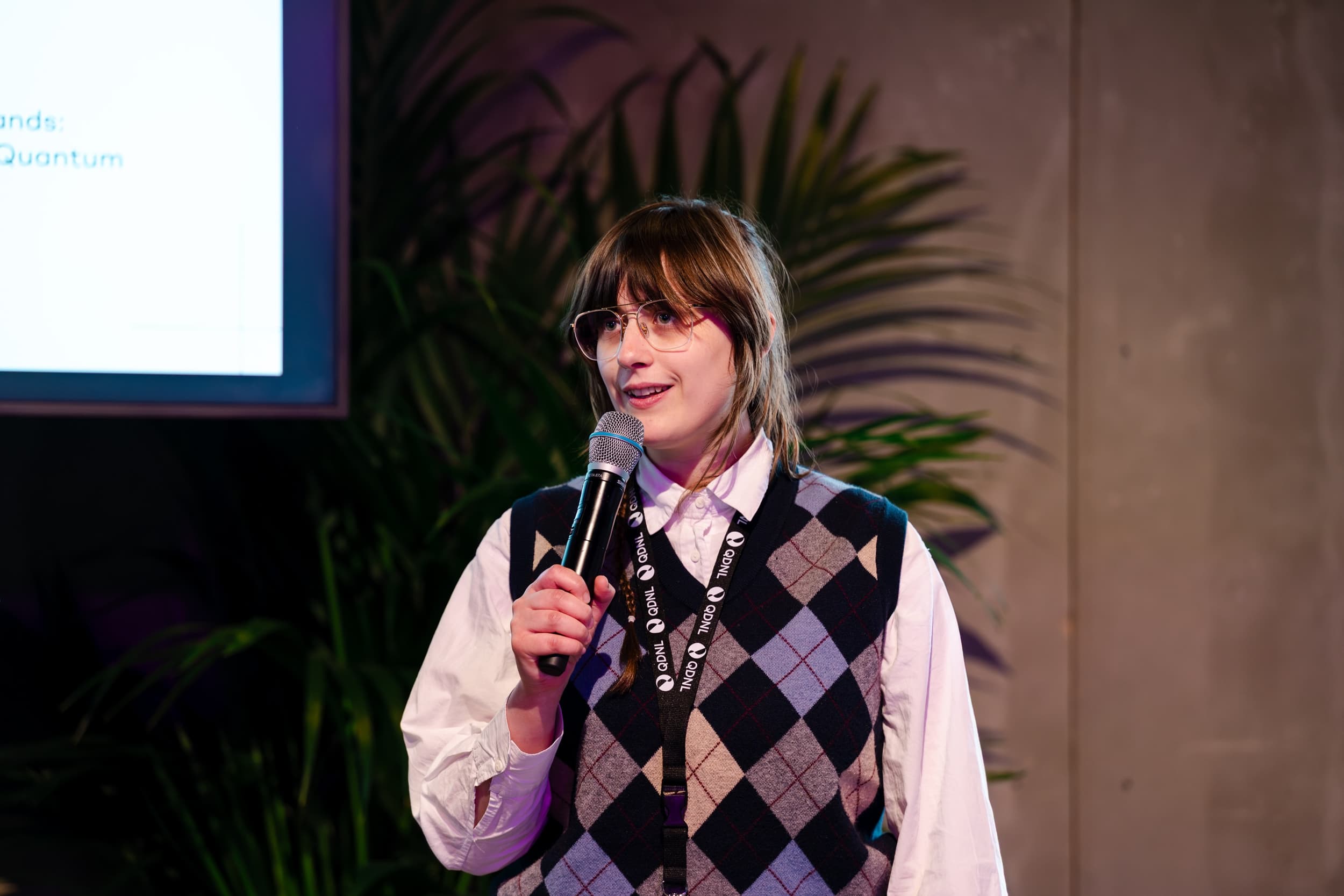
PhD student Elisa Pioldi wins pitch competition at Quantum Meets 2026
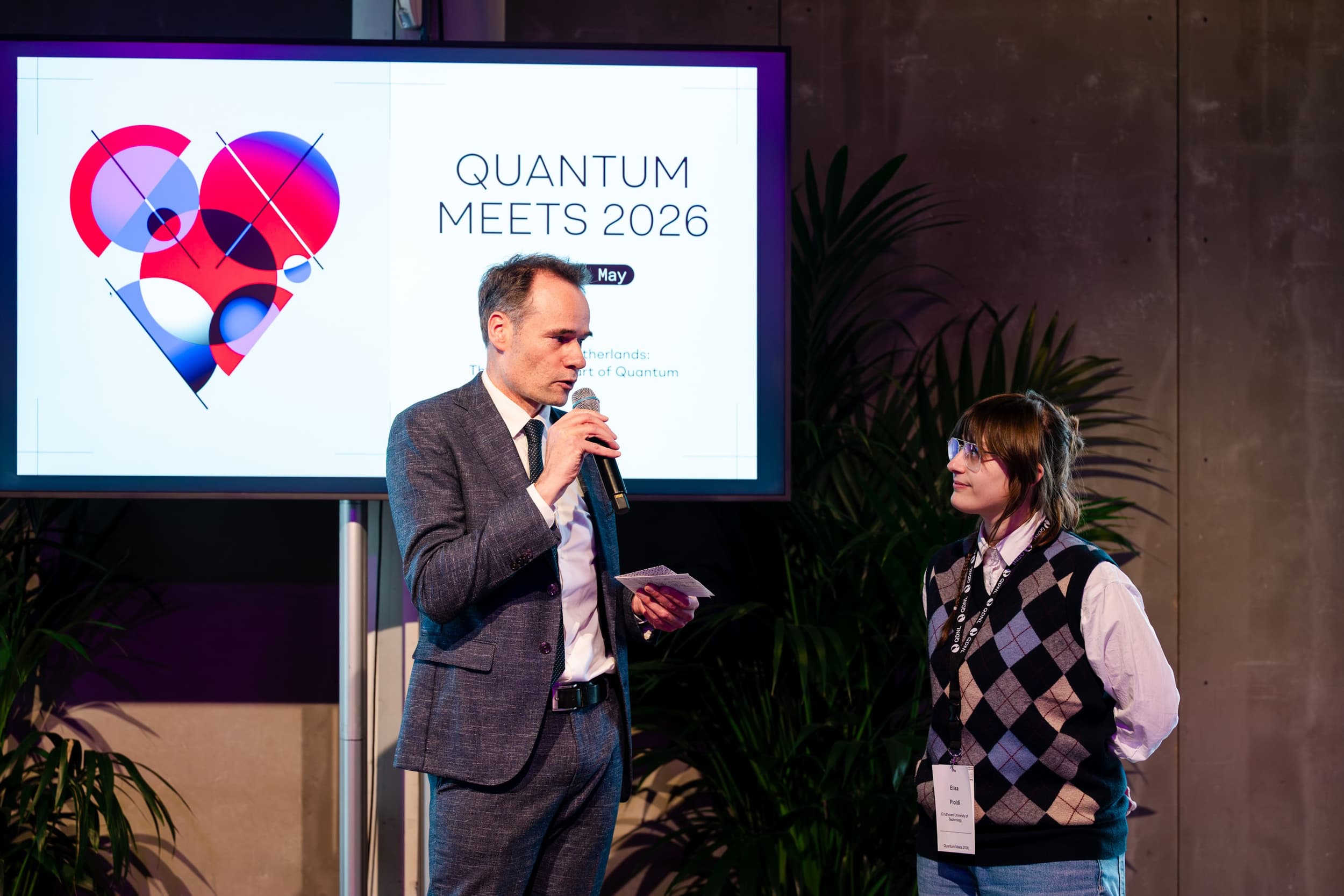
During Quantum Meets 2026, the Research and Innovation Action Line within the QDNL programme hosted a pitch competition. Attendees and judges heard from six emerging voices in quantum innovation, showcasing their work across quantum computing, quantum networking and quantum sensing.
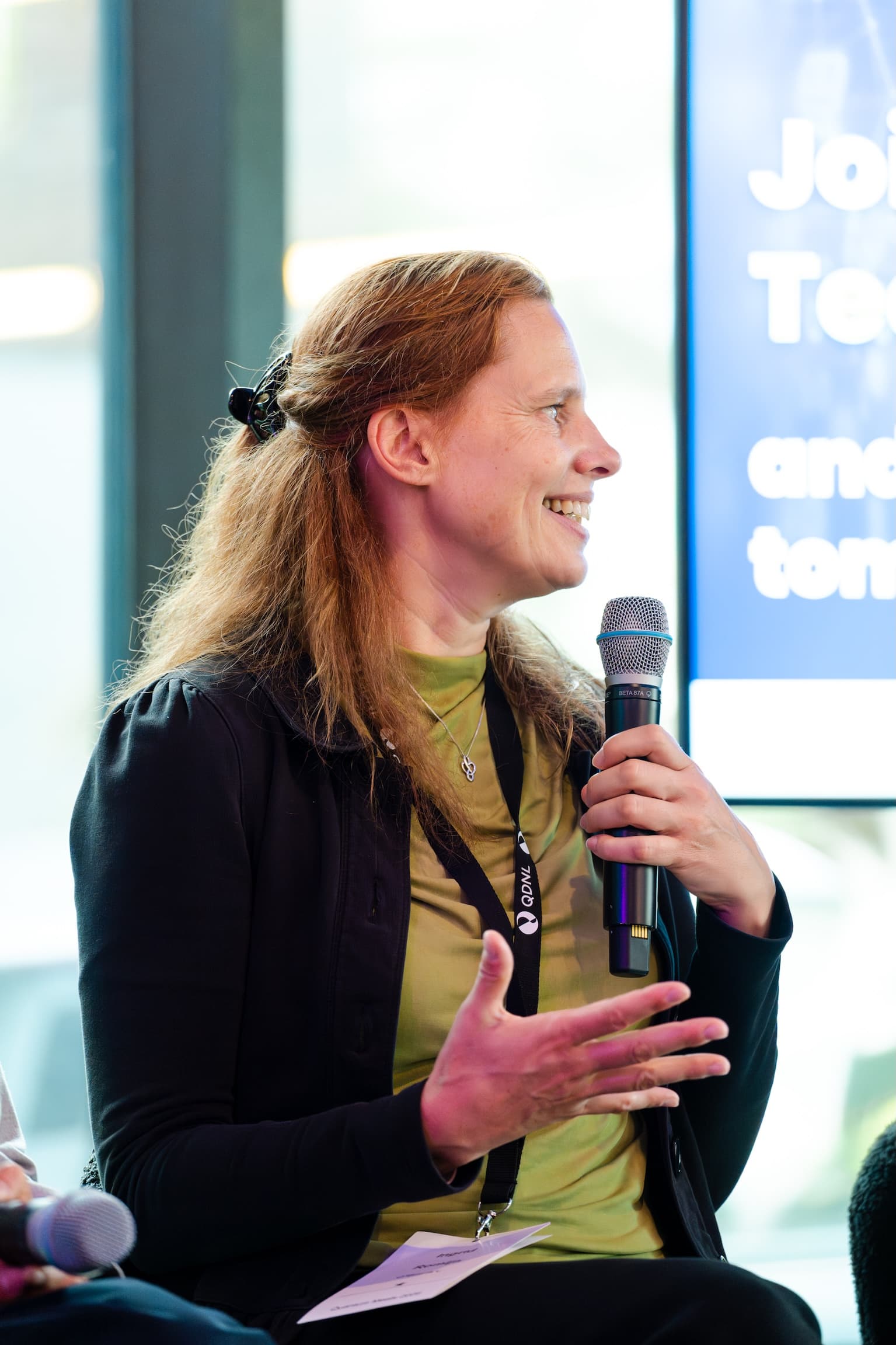
Ultimately, Elisa Pioldi, a PhD student in post-quantum cryptography at the Eindhoven University of Technology, delivered the winning pitch – wowing both the judges and fellow researchers with her comprehensive research, confidence and professionalism.
Following her successful pitch, we asked Elisa about her research and the value of pitching in competitions like these.
Could you describe your research in your own words and what led you to this field of study?
Many of today's building blocks for secure communication methods, commonly known as "cryptography", are based on mathematical problems that are labelled as "hard". This means that even supercomputers would take millennia to solve them.
The advent of quantum computers, which are expected to solve these hard problems quickly, poses a threat to the privacy and security currently ensured by classical cryptography. If quantum computers can solve the hard problems on which classical cryptography relies, then the building blocks of secure communication are compromised.
This is where my research comes in: we have to change the way we do cryptography. We need to base it on problems that are considered "hard" even for quantum computers. This is what is called "post-quantum cryptography", which is resistant to attacks from quantum computers.
In particular, I focus on "protocols", which are not just these building blocks, but also the complex interactions between them and the different actors involved.
"It was love at first sight with cryptography. I have always enjoyed solving puzzles and enigmas, as well as reading and writing mystery stories. Cryptography is the perfect intersection of these interests with mathematics and computer security."
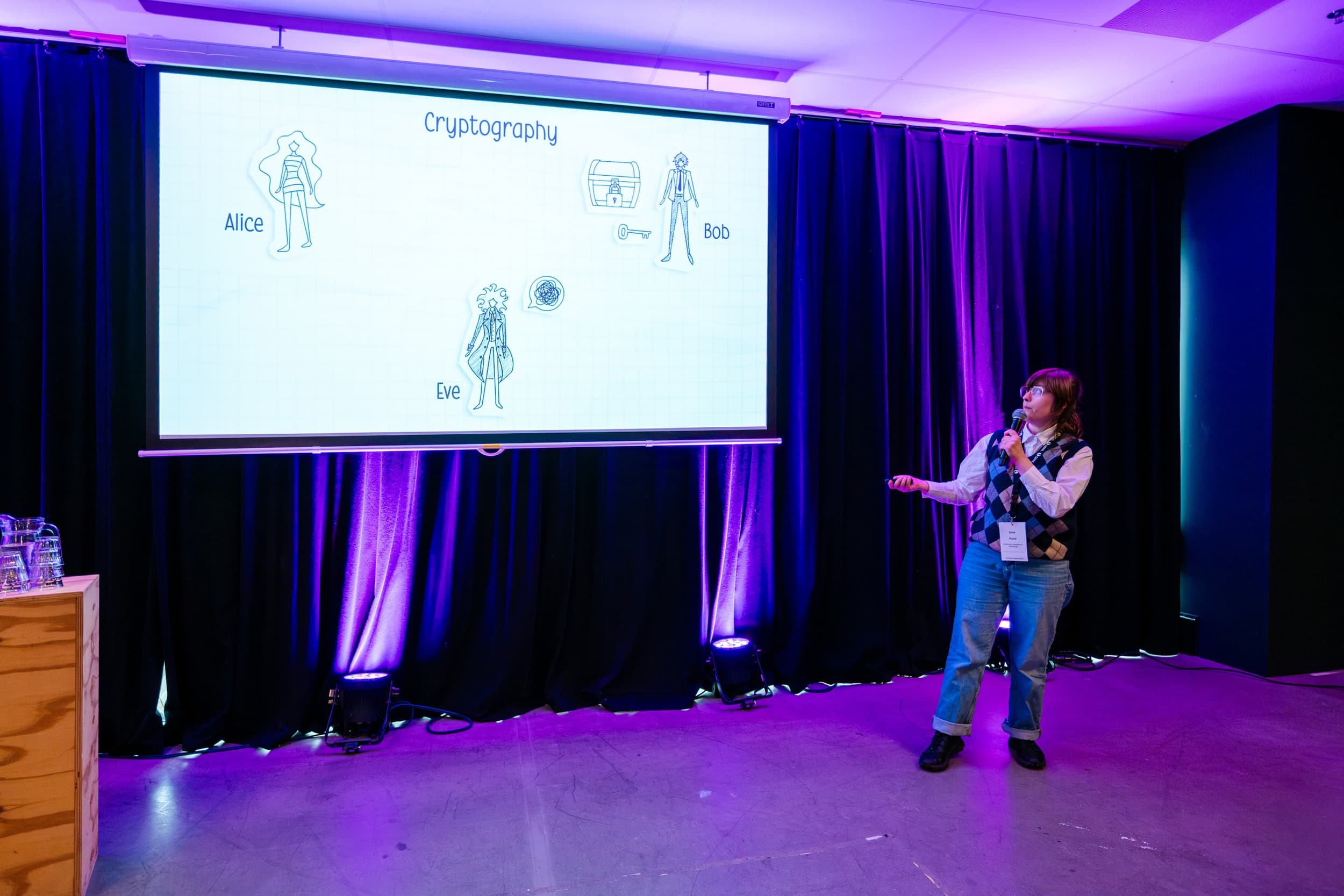
How many times have you pitched your work to an audience, and what is something you have learned from the pitch process?
I have spoken about my research many times, but this was the first time I had to "pitch" it.
However, I adopted the same process I do with all presentations. I don't try to explain everything, but I try to help my audience understand everything I say (and enjoy it in the process!). To do this successfully, I usually adopt a narrative style, like telling a story, and enrich it with graphics and animations.
"When doing this kind of outreach, where the audience is broad (rather than being highly technical), I imagine explaining my work to my parents, who do not have a mathematical or technical background. If they can understand my pitch, then I know I am doing it right."
I am always excited to talk about my research, especially when I feel it could have an impact on the people listening. Every speaking opportunity is a chance to enrich someone's knowledge about what I do and what I am passionate about, and I always try to convey my enthusiasm through the way I speak.
What do you see as the value of these types of pitch “competitions”?
Researchers often focus mainly on the technical details of their work when giving talks, assuming that the audience already has the necessary background. Therefore, they spend little time on the broader context.
Competitions encourage researchers to rethink this approach. In particular, pitch competitions with a broad audience push contestants to explain the context and importance of their research, rather than simply presenting the latest technical results.
Science needs to be communicated beyond the research community in order to grow and have a broader impact. Making it accessible to people outside the field is just as important as sharing it with experts.
QDNL is pleased to support programmes that encourage ongoing dialogue and open new opportunities for both emerging and established researchers.
Related news
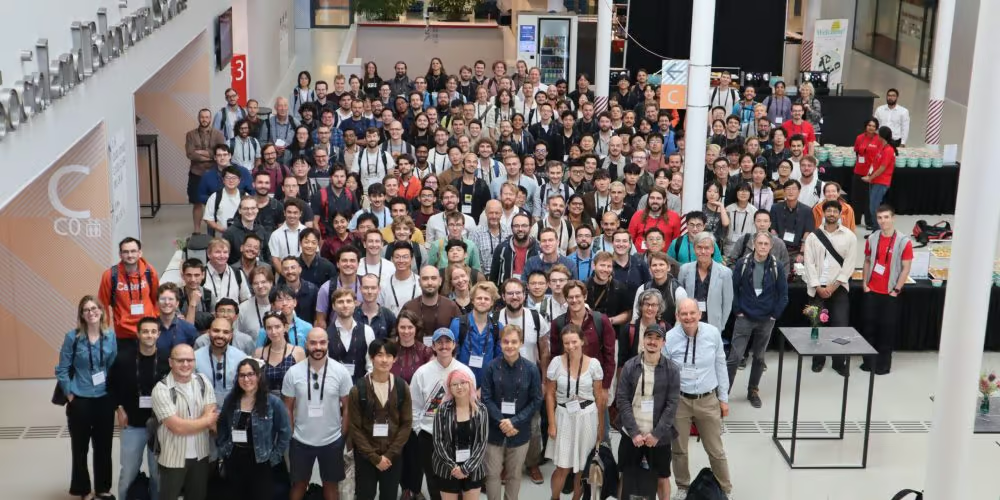
Advancing quantum computing through dialogue and networking
Q*Bird launches the Falqon® Key Manager to enable scalable quantum secure networks
Qubitrium launches QubitCore hardware into space
Q*Bird and Walton Institute deploy QKD network with expandable architecture
Leading Europe’s quantum frontier - UPM and Q*Bird launch Spain’s first multi-node MDI-QKD network
Q*Bird secures funding to scale Europe's quantum secure networks